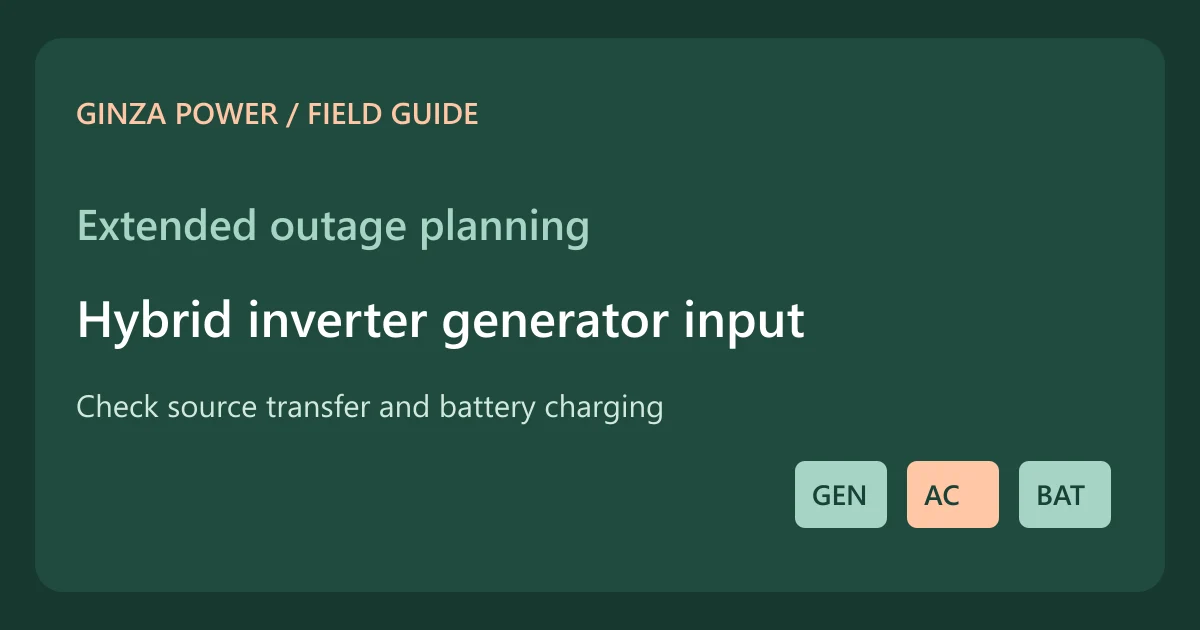
A hybrid inverter with a supported generator input can use an approved generator as an AC source during a long outage. Depending on the inverter and system design, generator power may serve selected loads, charge the battery, or do both. Start by confirming the exact model, approved source arrangement and transfer method. A label or port on the enclosure alone does not establish which functions are supported.
This guide is for buyers and operators reviewing a proposal or commissioning record. It describes decisions to discuss with a qualified installer. Generator connections, transfer equipment, earthing, neutral treatment, isolation and protection require an engineered installation using the equipment instructions and applicable site requirements.
Confirm the supported mode and transfer path
Some inverter/chargers have separate inputs for utility and generator. Others accept one AC input and depend on a compliant external transfer arrangement. A different design may charge the battery from an approved separate charger or keep the generator and battery backup systems independent. Do not assume a port can be repurposed, that grid and generator can be paralleled, or that an inverter will accept every generator waveform.
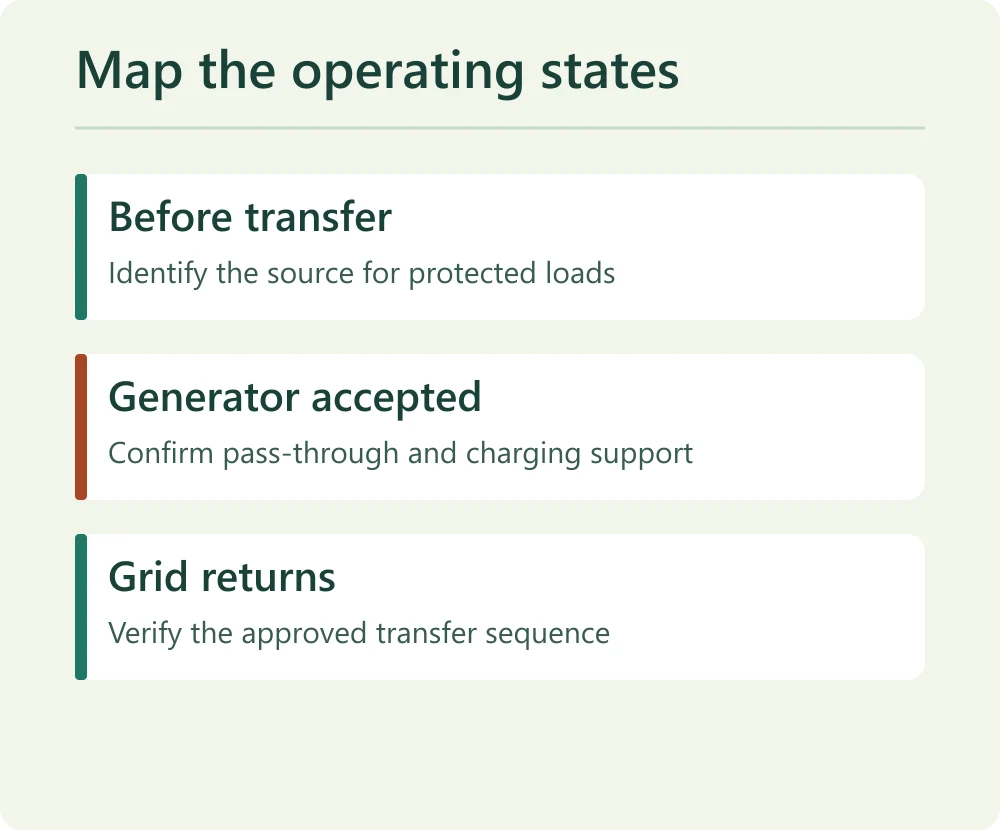
Ask for a source diagram that names each operating state. What supplies the protected loads before the generator starts? What can continue to run after transfer? Does the generator go through a pass-through path? Can the inverter draw from the generator for charging, and do solar panels continue contributing? What happens if the grid returns while the generator is running? An equipment quote should answer these questions for the actual models, not for a typical hybrid system.
If you are still deciding between a battery-led and a generator-led backup plan, start with the solar battery versus generator comparison. If you already own both, focus here on source acceptance, the charging budget and the handover test.
Share the source budget between loads and charging
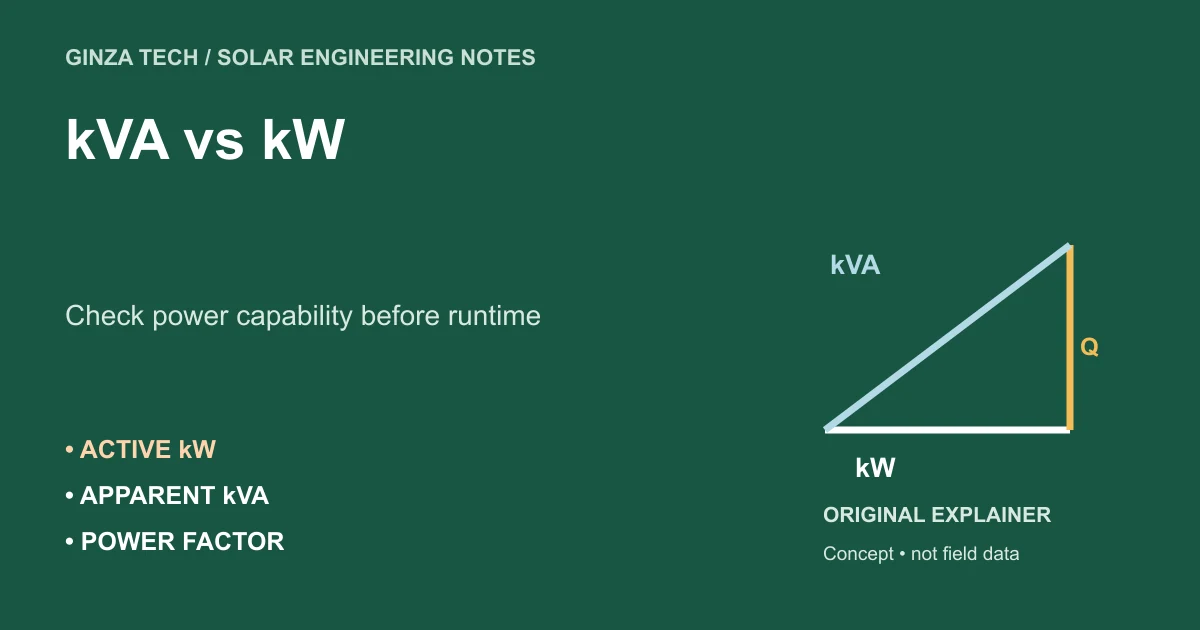
The generator needs enough real power and apparent power for the simultaneous conditions that the design allows. Check both the continuous kW and kVA limits, including derating and per-phase limits if relevant. Motor starts, compressor transients or uneven phase loading can matter even when an average number looks safe. Use the GINZA kW and kVA guide to separate these checks.
Suppose a hypothetical design can allocate 4.0 kW of steady source power at the operating conditions after its declared margin. Protected loads are consuming 2.6 kW. Ignoring other source-side consumption in this example leaves 1.4 kW AC for charging. At an assumed 90% AC-to-battery conversion efficiency, the resulting battery-side power would be 1.26 kW if the battery accepts it and the controls allow it. That is a planning power balance, not a charger setting. The actual system can be limited by AC input current, generator power factor, charger losses, auxiliary draw, BMS requests or the permitted charge rate.
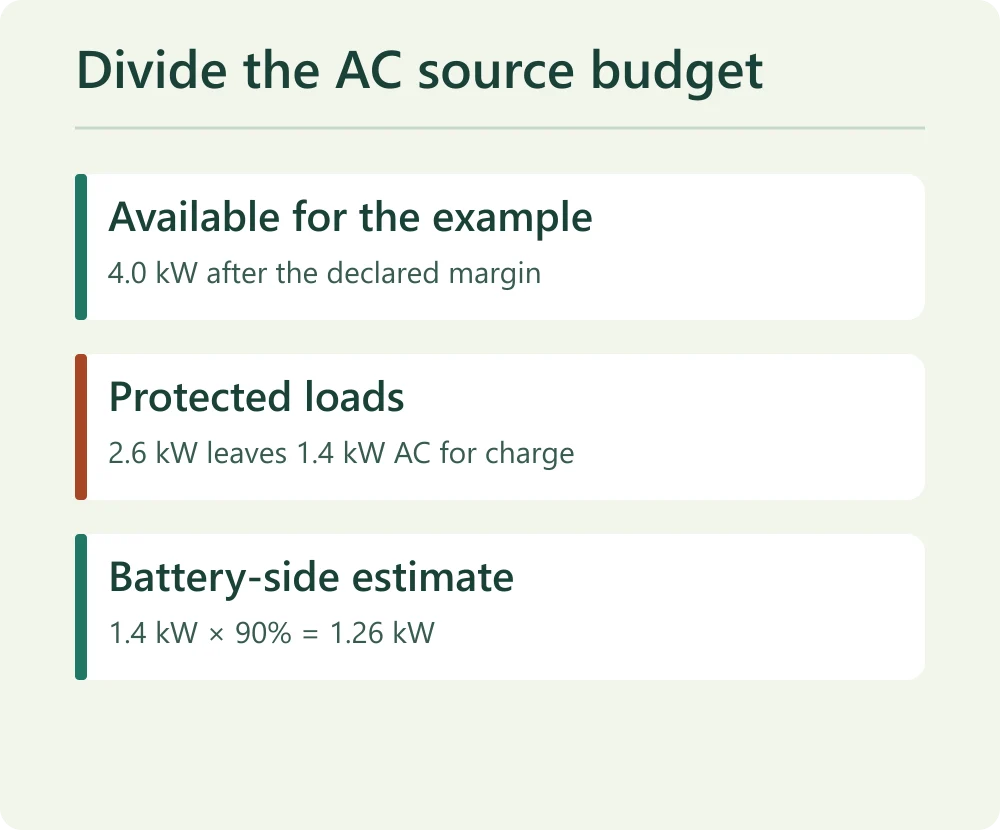
If the battery needs 5 kWh of additional stored energy, division by 1.26 kW gives about four hours in the idealized case of a constant net storage rate. This example omits changes in battery acceptance, battery internal loss, startup, transfer and generator cool-down. The relevant rate for a recharge estimate is the net energy entering the intended battery window, not generator nameplate power. Ask whether the system reduces charging when operating loads rise and whether it can resume after the event without manual intervention.
Plan for source rejection and ordinary changes in load
A generator can be running while the inverter declines to transfer. The inverter may require stable voltage and frequency for a time before acceptance, and a generator can dip or distort under a sudden load. A supplied engine rating or an unloaded sound check cannot establish that the combination works. Compare generator output characteristics and inverter requirements using the approved documentation. Victron Energy’s inverter/charger selection guide gives examples of supported source arrangements and input control.
Use logs to distinguish failed start, source out of range, transfer refusal, charger limit and a battery-side stop. Record the inverter event, generator state, AC voltage and frequency where monitored, what the loads were doing, and battery SoC and allowed charge current. If an inverter reverts to battery whenever a compressor starts, the log can show whether source quality, transient demand or a configured limit is the first event. Avoid widening protection tolerances or changing source wiring simply to clear a fault.
Where automatic start is required, ask how the system decides when to start and stop. Some models support SoC-based scheduling and some depend on separate controls. Discuss start delay, minimum run time, cooldown, what happens after a failed start, manual mode and the effect of communications loss. The SMA Sunny Island generator guidance illustrates model-specific timing and current settings.
Write the acceptance test before the equipment arrives
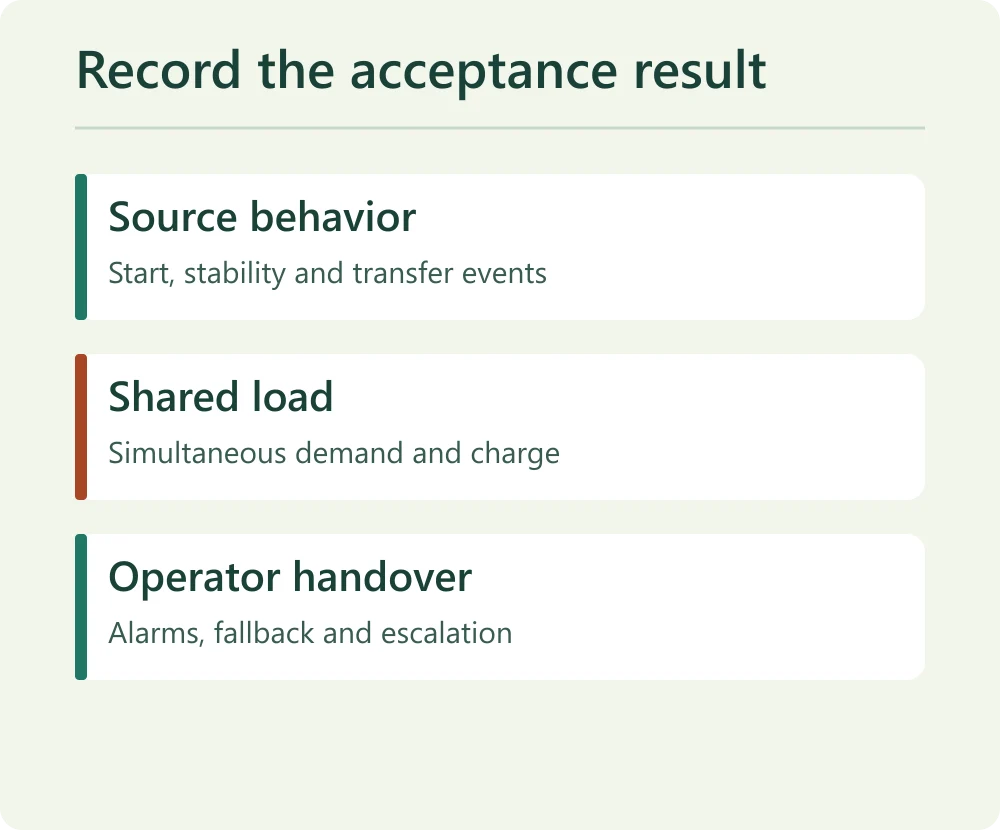
An acceptance plan should list the load combinations, source transitions and events that the installer will demonstrate. Include an ordinary outage, return of grid, generator charging with representative protected loads, and a clear method to confirm which circuits remain supported. For critical loads, agree on limits for interruptions and confirm that alarms reach whoever responds to them. The solar battery commissioning guide provides a broader handover structure.
Ask for the final operating modes, serial numbers, firmware, battery compatibility, source ratings and the protective scheme to be documented with the record. Put allowed operator actions and escalation contacts in an accessible handover document. An installation that needs a person to recognize a mode change should make that responsibility clear rather than relying on a manual left unopened near the inverter.
Set a meaningful test window for the battery. A nearly full battery may accept little charge, so a test conducted only at high SoC can miss how the generator behaves when sustained charging and a normal site load occur together. The commissioning team can choose a safe window in line with the manufacturer, check acceptance at representative load and preserve the readings. Repeat the observation when a new load or generator is added. Decide who signs off on revisions to the operating settings and what evidence is retained from the earlier test.
For a site where the battery bridges a start delay, include that delay in the design allowance and identify the protected loads that cannot tolerate an interruption. Also specify how many start failures the system reports and how an operator learns that backup is running from the battery alone. These details can be more consequential than the nominal charge time in a rare but prolonged outage.
Keep the generator at an approved installation location with suitable ventilation and separation. Have a qualified installer check the site, transfer arrangement and manufacturer instructions. Never backfeed a building or utility circuit through an outlet or improvised connection. If the site cannot meet the operating requirements, revisit the design rather than treating protection as an inconvenience.
Share the inverter and generator models, protected-load list and required outage duration with GINZA Power for a design review. State whether start must be automatic, whether the generator already exists, and which loads must continue if the generator is unavailable.
Sources and interpretation
- Victron Energy inverter/charger selection guide explains supported input arrangements and examples of AC power control.
- SMA Sunny Island generator settings guidance illustrates the behavior of particular inverter models. This article’s numerical example is fictional.