Most ordinary grid-tied solar systems stop supplying a property when the grid goes down, even if the panels are in full sun. To keep circuits operating during a Philippine brownout, the system needs an approved way to isolate from the utility and equipment that can supply a stable local AC source. A supported battery and backup-capable inverter are a common way to do this. Verify the actual wiring and settings with your installer before relying on any circuit.
The useful question is which outlet or appliance will still have power when the outage starts. A hybrid inverter on the wall does not answer that on its own. The answer comes from the installed backup equipment, which loads connect to it, and how much power and stored energy remain when the grid fails.
Why solar shuts down on many properties
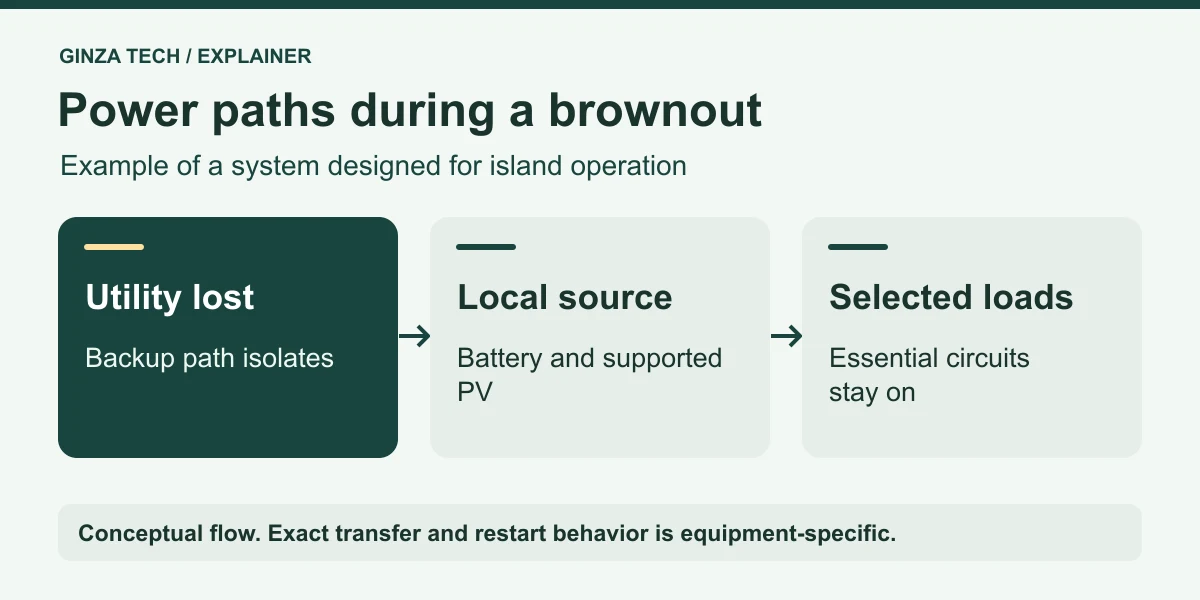
A typical grid-following inverter depends on the utility’s voltage and frequency reference. When the grid is lost, the inverter stops energizing that connection. The U.S. Department of Energy’s solar resilience guide explains how an appropriately designed solar and battery system can isolate and operate locally. The isolated system must continue to match generation and demand within its own equipment limits.
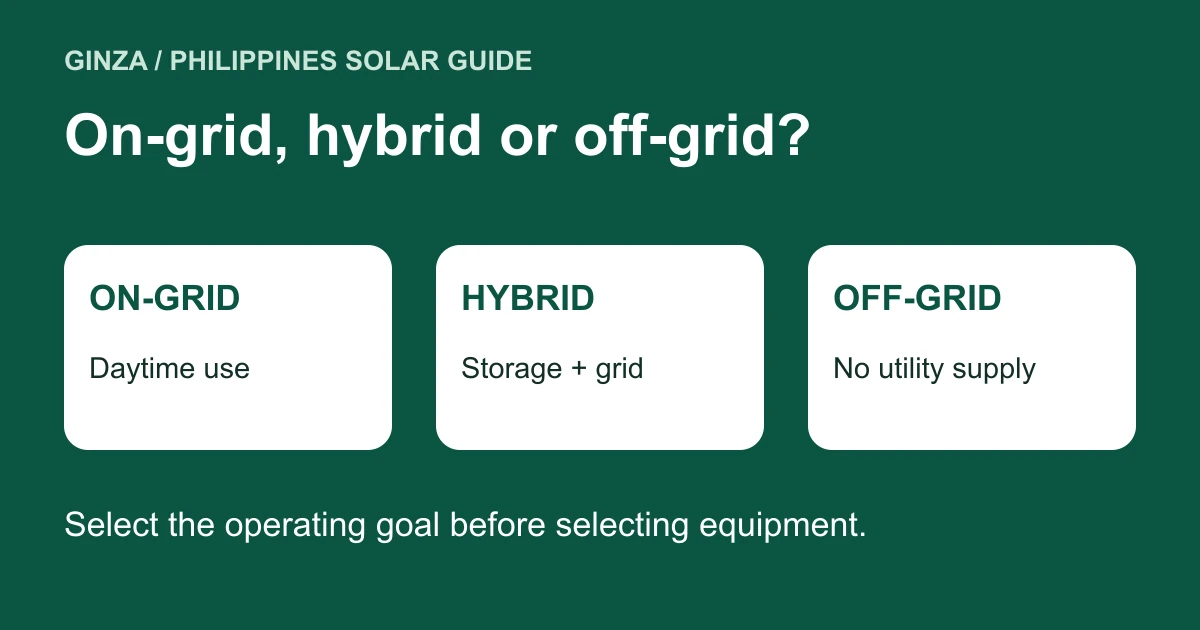
Some products offer a dedicated daytime backup feature with particular conditions. Its performance depends on available sunlight, the supported circuits and the product manual. Ask your installer how the equipment behaves under cloud cover and whether the output can recover after a load exceeds available power. Use the on-grid, hybrid and off-grid comparison if you are still choosing the overall system type.
Trace the circuits you expect to keep alive
Ask for a schedule showing the circuits supported during an outage, with the equipment and rooms they serve. A backed-up circuit often feeds several outlets. The router may sit on one outlet while a kettle or portable heater plugs into another. The installer should account for what the household can plug in and identify any restrictions clearly on the handover schedule.
Some properties back up a dedicated essential-load panel. Others can supply a larger panel through compatible transfer equipment and controls. The second design still needs a documented plan for large loads, such as water heaters, pumps, EV chargers and air conditioning. In a three-phase building, check the actual phase allocation and use the three-phase backup review for phase limits.
Walk through the first hour of a real outage
| Event | What to ask your installer to demonstrate |
|---|---|
| Utility supply disappears | Isolation operates correctly and the supported circuits transfer as documented. |
| Motors restart | Refrigerator or pump starts successfully when other planned loads are on. |
| Sunlight changes | Controls manage available PV and use storage within the operating limits. |
| Battery reaches reserve | The system gives the expected warning and follows the supported cutoff behavior. |
| Utility supply returns | The approved return sequence restores normal operation and the expected reserve. |
Ask how long the transfer may take on your equipment. A router, desktop computer or point-of-sale terminal can reset during a brief gap even when the lights return quickly. If continuity matters, ask the provider how a correctly specified UPS or supported transfer arrangement should be coordinated with the site system. Test the actual devices used during business hours. Use the Wi-Fi router backup guide to include the ONT, check output compatibility and test the network through that transfer.
Set a reserve using a realistic load list
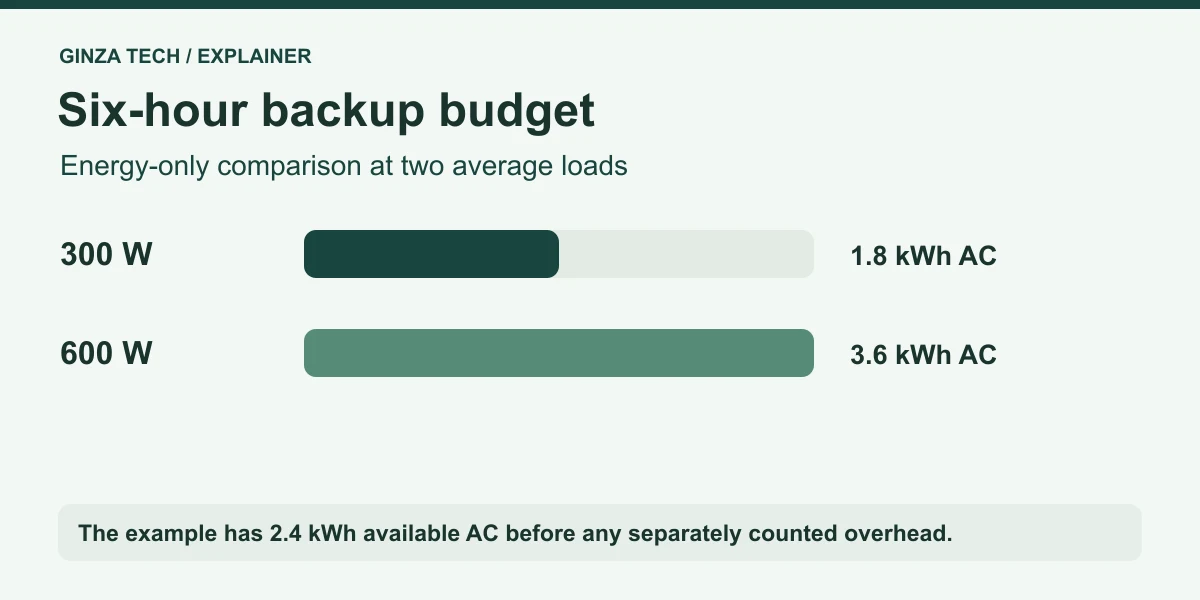
Imagine a home wants lights, internet and refrigeration during a six-hour evening outage. Suppose the measured average demand of those circuits is 300 W over the relevant period. They would use 1.8 kWh of AC energy before the inverter’s own consumption. If the usable AC energy at the actual starting battery state is 2.4 kWh, the arithmetic leaves 0.6 kWh for overhead and variation. A 600 W average would require 3.6 kWh and exceed the same energy budget. The compressor’s momentary start also needs a separate power check.
Battery reserve settings determine how much charge the system can keep for outages while it is connected to the grid. The available energy still depends on current state of charge, temperature, age and the shutdown threshold in backup mode. Ask for the response when the battery is near minimum charge at the moment of grid failure, as well as the ideal daytime demonstration. Use the home storage sizing guide for the full capacity calculation and the refrigerator backup worksheet to measure cycling loads. The reserve guide explains how to translate the reported starting percentage into an available window.
Find out whether solar can help after the grid goes down
A supported solar input can run loads or recharge storage while islanded. AC-coupled solar may require a supported control method and may operate differently in backup than in normal grid operation. Ask what the system does when the battery is full and solar production exceeds the isolated loads. Ask again for the opposite case, when PV is weak and the battery reaches its shutdown point. The inverter may need a minimum battery state, a restart sequence or grid restoration to recover. The existing-solar retrofit guide explains why the architecture matters.
Record the backup promise at handover
Ask the qualified installer to perform the acceptance test and leave a record with the exact inverter and battery models, circuit schedule, transfer conditions and state-of-charge settings. Include any start and restart limits for large equipment. Test during daytime and assess an evening outage with no useful PV. Document which person to call if the app and local equipment tell different stories. The installer commissioning checklist provides the wider handover workflow.
Decide what has to survive a second outage
After an evening outage, the next morning’s battery state may be much lower than normal. Consider a second interruption before solar has had time to refill the reserve. Ask which circuits can be deferred and how much energy can realistically return from the grid or available PV during the gap. If the site has unreliable restoration windows, review the recharge requirement independently of the first outage duration. The charging-time worksheet helps test the recovery window before the second event.
Write the plan in terms that occupants can use. A shop owner might allow the till, router and one refrigerator to stay on while asking staff to postpone the pump and kettle. Agree where that guidance appears, and ask the installer to test it in the handover scenario. A simple circuit schedule makes the expected behavior easier to verify than a promise to back up the entire building.
Sources and interpretation
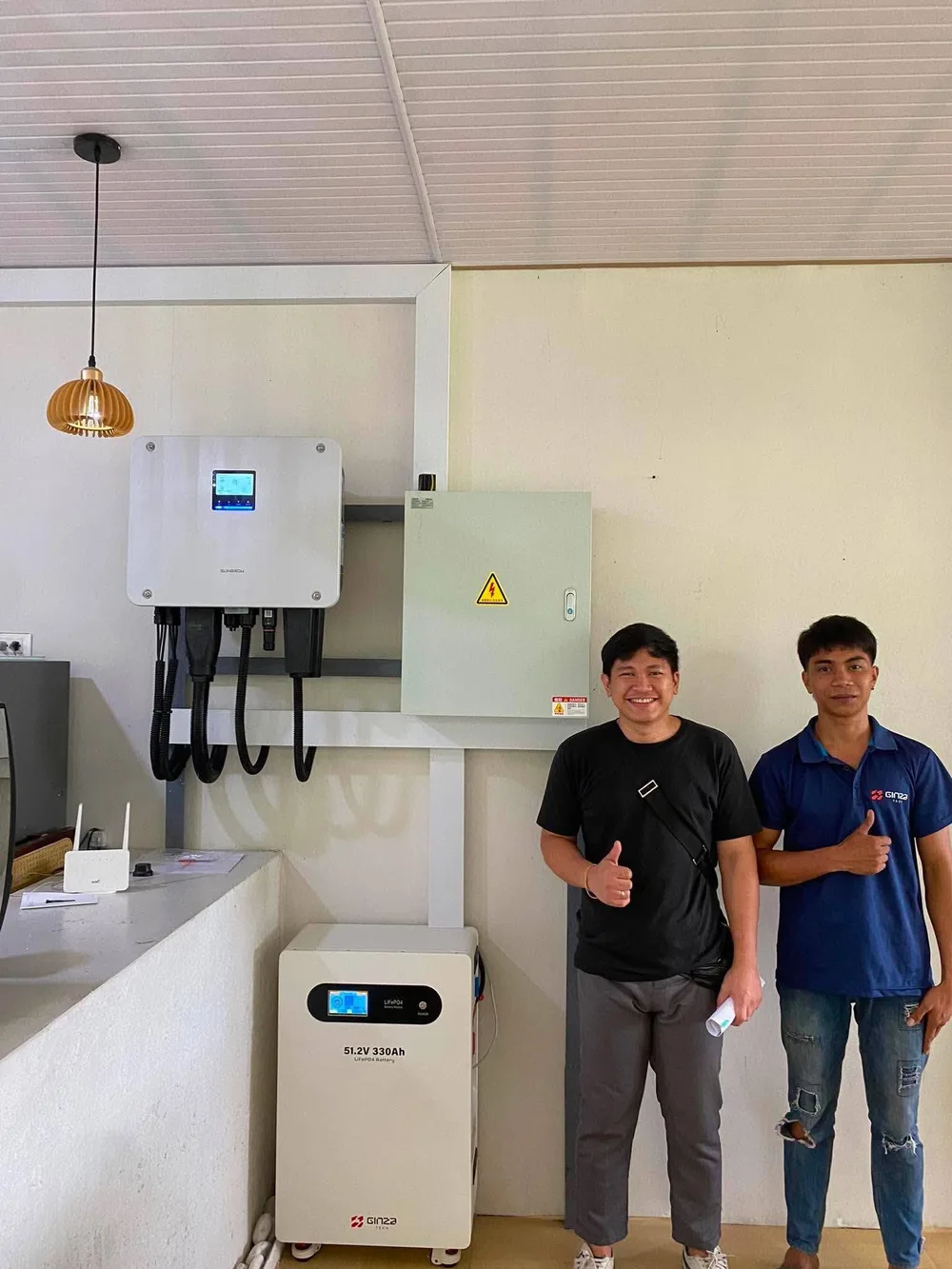
The six-hour loads and 2.4 kWh available-output figure are hypothetical. The DOE resilience reference explains isolation and local operation. The installation photograph does not identify backed-up circuits or prove a transfer test. Supported operating modes, available energy and acceptance evidence belong to the actual installed system.
Frequently asked questions
Does a bigger solar array guarantee longer backup?
Backup duration depends on the selected loads, usable storage and how much generation the installed equipment can use while isolated. Evening backup typically depends on energy already stored. Ask the installer for an estimate using a low-solar scenario and a measured load profile.
Will an export agreement give me backup capability?
Net metering governs eligible normal-operation grid exports. Ask for a separate backup design and outage test. See the Meralco net metering bill guide for the import and export side.
Can I add a generator later?
Ask the installer to confirm that the exact equipment and transfer design support a generator. Request the approved input limits, source selection behavior and responsibilities before connecting anything. For a project review, send the equipment model, expected outage length and list of circuits you need to keep on. The battery-versus-generator comparison helps compare the same outage load and recovery plan across the two options.